
Recommended configuration
Controlled studio, approved scripts and product knowledge, voice/motion triggers, human director and safety boundary.
RETAIL & LIVESTREAM SOLUTION
The reference design supports malls, stores, brand activations, product launches, livestream studios and filming. Autonomous movement, product handling and commerce-system access depend on hardware, site, platform APIs and local requirements.
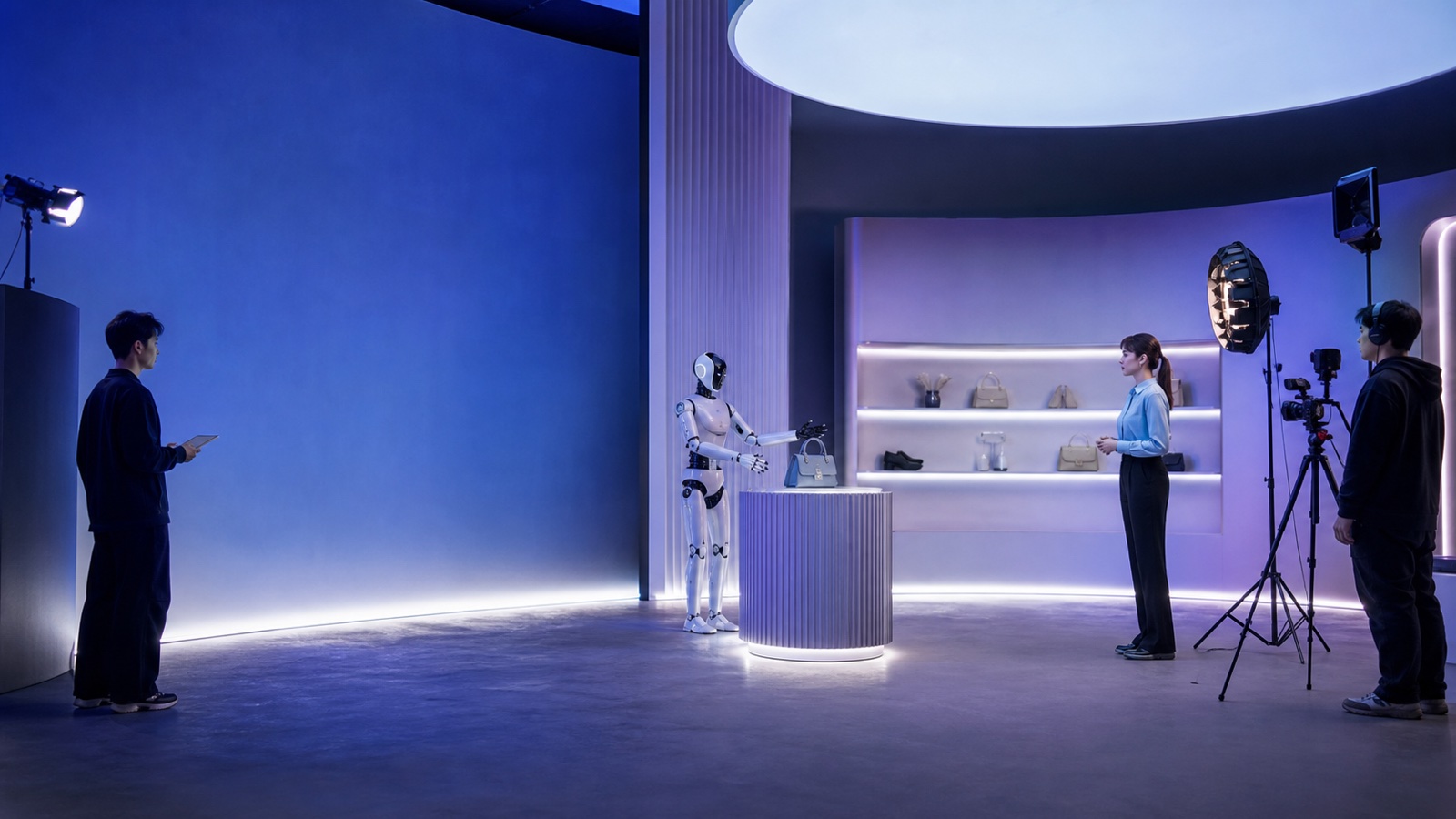
Robot retail and livestream solution for stores, malls, launches and studios with governed product content, scripts, motion, staff handoff, measurable funnels and compliance controls.
Confirm these items before quotation and scheduling; each project requires a tailored scope.
Controlled studio, approved scripts and product knowledge, voice/motion triggers, human director and safety boundary.
Product material, platform rules, brand scripts, studio and lighting, accounts, approver and takeover flow.
Scripts and knowledge, trigger workflow, scene orchestration, rehearsal evidence, runbook and content update process.
Catalogue and script volume, platform interfaces, brand approval, motion customization, studio equipment and rehearsals.
These existing field and system materials illustrate crowds, sites, programs, maps and operating variables. They do not claim a customer outcome or replace exact-edition testing.


A store robot operates around uncontrolled visitors and needs route, volume, stopping and distance controls. A studio robot is coordinated around framing, timecode, dialogue, motion and host timing.
In both settings define whether the robot attracts, explains or moves a lead to the next step. Price, stock, warranty and promotion data must come from an approved source and must never be invented by a model.
Maintain product names, variants, prices, campaign dates, target audience, prohibited wording and update timestamps. Advertising and livestream claims must follow platform and sector rules.
Health, safety, financial, efficacy or comparison claims require client legal or compliance approval. Robot-generated drafts must remain inside the existing brand review process.
Staff must be able to pause, switch scripts, take over questions and trigger a stop. Livestream latency, recognition errors and motion failures need a backup camera shot and host response.
Avoid unnecessary identity recognition in public stores. If interactions or leads are recorded, explain the purpose, obtain appropriate permission and restrict access.
Define reach, qualified interaction, scan, lead, staff handoff, order and repeat purchase with a source and attribution window for each measure.
Sales change is also affected by media, host, offer, traffic and inventory. A case study should disclose the measurement period and cannot attribute every incremental order to the robot.
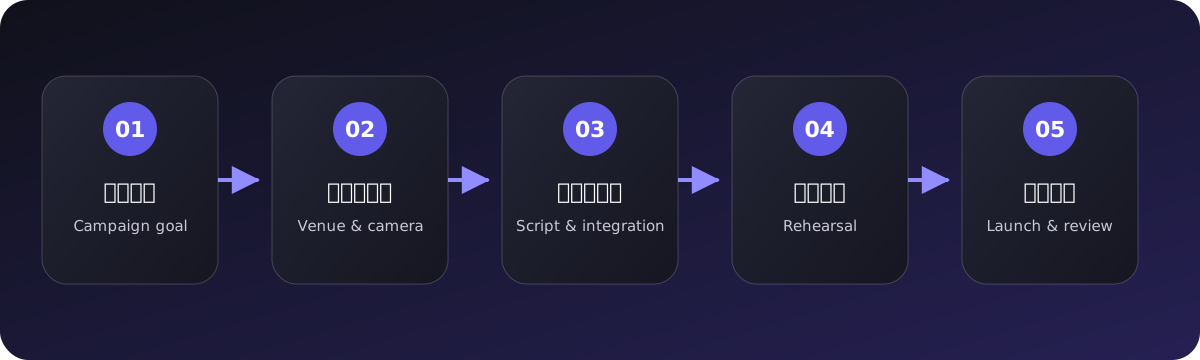
| Format | Robot role | Core systems | Control focus |
|---|---|---|---|
| Store floor | Greeting, story, route and staff handoff | Product source, map and campaign data | Crowd, accuracy and privacy |
| Mall activation | Announcement, interaction and traffic | Campaign script, route and QR landing | Volume, route and safety boundary |
| Livestream studio | Dialogue, motion, product cue and interaction | Run of show, product source and timecode | Platform rules, latency and human control |
A real selection decision must combine the job list, field conditions, exact-edition manufacturer documentation, a representative test and a written quotation. General guidance on this page does not replace final configuration, test records or acceptance documents.
Fact-checking note: capability, pricing and lead-time statements are conditional planning guidance, not guarantees for a site, outcome or return. Final results depend on the model, options, software release, site, network, operator readiness and signed scope. Confirm through site discovery, representative tests, a written quotation and current manufacturer documentation.
It is usually strongest at attention, explanation, interaction and staff handoff. Ordering, payment or membership access depends on secure APIs and the client workflow, with human confirmation for critical transactions.
A system may draft copy, but product facts, price, promotion, restricted wording and regulated claims require brand approval before publication. Staff need a live correction path.
Define reach, interaction, scan, lead, handoff and order with auditable sources and an attribution window. Do not assign all improvement during a campaign to the robot.
Some approved content and routines may run locally, but live Q&A, product feeds, consoles and remote support may be limited. Test connectivity and degraded operation on site.
We will review the store or studio workflow, approved content, staff controls and metric definitions before selecting hardware and integrations.