
Recommended configuration
Suitable mobile platform, content system, voice/display, mapped navigation, human takeover and operations console.
GUIDE & RECEPTION SOLUTION
A humanoid, quadruped or other service platform may be selected according to access, interaction and brand goals. This page describes a reference architecture; final functions require site discovery, source content and a representative robot trial.
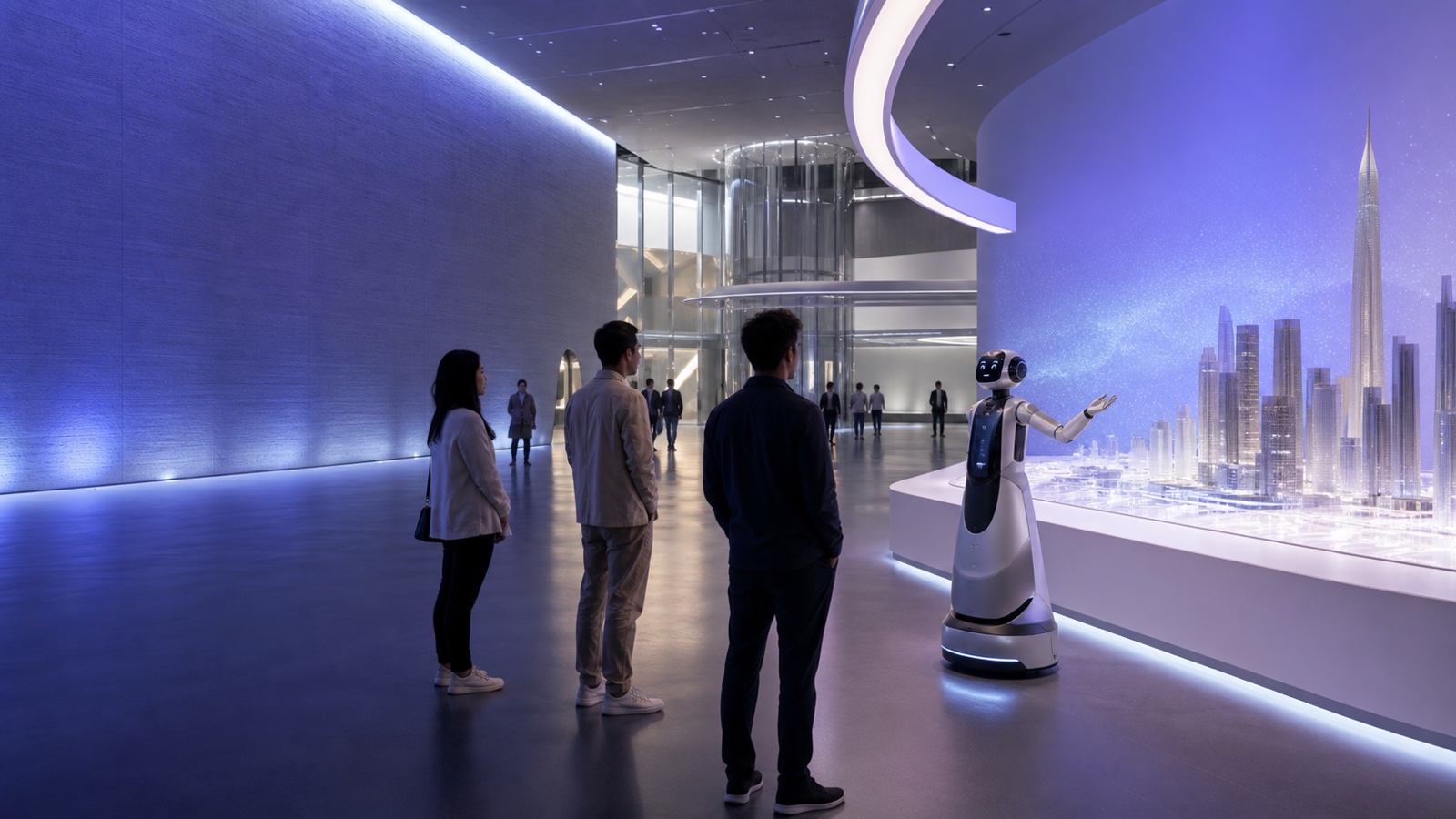
Robot guide and reception solution for showrooms, visitor centers, campuses, retail and public venues with greeting, presentation, Q&A, route guidance, content control and staff handoff.
Confirm these items before quotation and scheduling; each project requires a tailored scope.
Suitable mobile platform, content system, voice/display, mapped navigation, human takeover and operations console.
Site map, approved content, visitor flow, busy periods, power, network, privacy rules and operators.
Routes and points, knowledge content, interaction flow, takeover plan, tests, training and update method.
Map complexity, content approval, noise and crowds, lift interfaces, network, safety review and pilot rounds.
These existing field and system materials illustrate crowds, sites, programs, maps and operating variables. They do not claim a customer outcome or replace exact-edition testing.


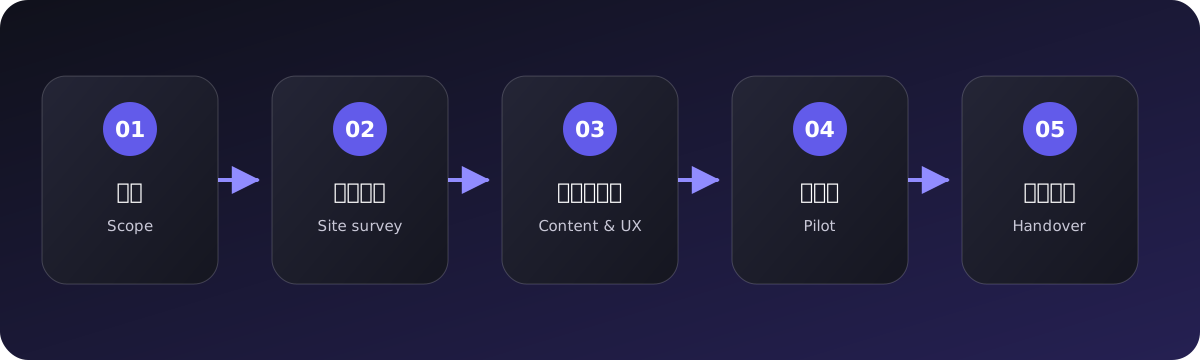
Map arrival, need discovery, language selection, presentation, route guidance and handoff when the system cannot answer. Define robot and staff responsibility at every step.
The robot must not block entrances or replace required accessibility and staffed service. Peak periods, children, international groups and temporary events need separate handling rules.
Opening hours, events, ticketing, brand information and routes change. High-frequency answers need a source, content owner, publish date and expiry process.
Generative responses require a defined domain, refusal rules, sensitive-topic controls and human escalation. Unreviewed model output should not be represented as the venue's official answer.
Mapping is only the beginning. Test glass, reflections, narrow aisles, lifts, temporary stands, children, trolleys and peak traffic. Presentation stops need safe standing space.
On route failure the robot should pause, avoid, return to a safe point or notify staff. Lift use, multi-floor travel and outdoor operation require separate validation.
Useful measures include greeting reach, completed tasks, valid answers, staff handoffs, route success, interventions, device events and content corrections. Define the method before the pilot.
Only verified logs, observations and client-approved figures should appear in a case study. Satisfaction results need a documented sample and survey period.
| Layer | Scope | Acceptance focus | Dependency |
|---|---|---|---|
| Interaction | Greeting, voice, screen and language | Trigger, audibility and refusal | Noise, content and language review |
| Content | Presentation, FAQ, events and routes | Accurate, versioned and updateable | Client source material |
| Mobility | Map, navigation, avoidance and stopping | Representative-flow completion | Site and network |
| Operations | Console, logs, handoff and daily checks | Clear ownership and recovery | Staff and process |
A real selection decision must combine the job list, field conditions, exact-edition manufacturer documentation, a representative test and a written quotation. General guidance on this page does not replace final configuration, test records or acceptance documents.
Fact-checking note: capability, pricing and lead-time statements are conditional planning guidance, not guarantees for a site, outcome or return. Final results depend on the model, options, software release, site, network, operator readiness and signed scope. Confirm through site discovery, representative tests, a written quotation and current manufacturer documentation.
No. Define an approved knowledge domain, refuse or escalate unknown and sensitive questions, and maintain a correction and release process.
It may need clearer routes, stops, charging, connectivity or signs. The answer depends on robot dimensions, visitor flow and existing facilities and follows site discovery.
Yes, but recognition, speech, terminology and the full service journey need review in each language. Automatic translation alone is not a production acceptance method.
Define task completion, valid answers, route success, handoffs, device events and operator intervention before the pilot, then reconcile system logs with site observations.
We will assess the visitor journey, knowledge boundary, access, network, staff model and acceptance measures before proposing a pilot.