Recommended configuration
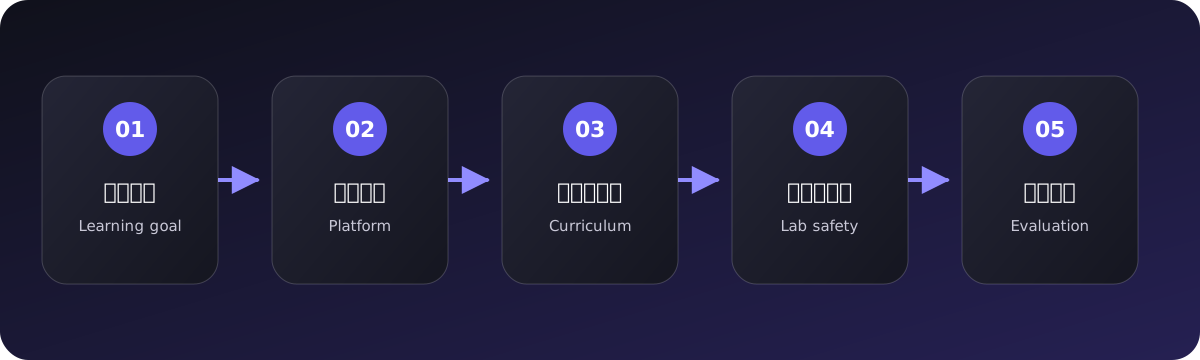
Choose edition, SDK, simulation, compute, sensors, lab material and safety kit from learning outcomes or the research question.
EDUCATION & RESEARCH SOLUTION
The reference scope supports school outreach, vocational training, university courses, laboratory research and competitions. Risk and interface depth differ by learner, research domain and product edition, so curriculum and experiments require local design.
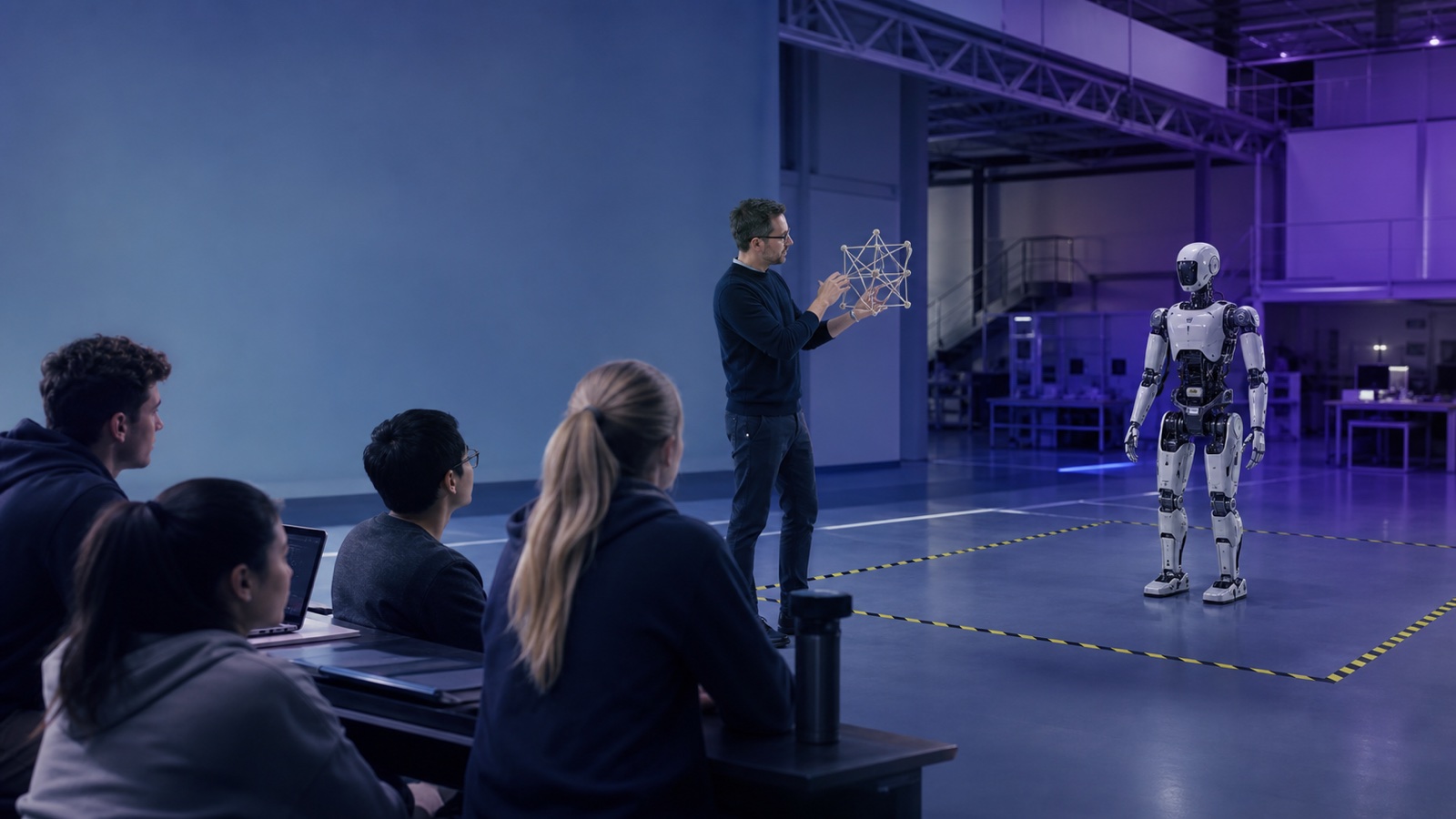
Robot education and research solution for schools, vocational programs, universities and labs with model selection, curriculum, simulation, interfaces, instructor training, safety and reproducibility.
Confirm these items before quotation and scheduling; each project requires a tailored scope.
Choose edition, SDK, simulation, compute, sensors, lab material and safety kit from learning outcomes or the research question.
Learner level or research goal, contact hours, prerequisites, lab conditions, instructors/researchers and data needs.
Configuration and access list, lab or course framework, examples, deployment, training, safety notes and reproduction record.
Edition, course depth, experiment engineering, staff readiness, data ethics, procurement and academic calendar.
These existing field and system materials illustrate crowds, sites, programs, maps and operating variables. They do not claim a customer outcome or replace exact-edition testing.


School programs may focus on perception, control and AI literacy; vocational programs on deployment and maintenance; universities and labs on control, planning, perception or embodied intelligence.
Every experiment needs prerequisites, steps, expected outcome, data, assessment and safety notes. A dance demonstration is not a complete curriculum.
Verify degrees of freedom, sensors, compute, control rate, SDK, simulation, logging, remote stop and serviceable parts. Interface access may vary across editions of the same product.
For low-level control or algorithm research, validate APIs, examples, documentation and technical support before purchase. An application-configuration edition should not be represented as a full research platform.
Set instructor-only demonstrations, protected operation, reduced-speed control and independent experiment rights according to learner age and motion risk. Trained staff should control dynamic routines inside a boundary.
Manage booking, charging, batteries, inspection, faults, accounts, code releases and datasets. Camera, voice or human-subject data may require institutional ethics and privacy review.
Acceptance requires instructors or students to complete representative experiments from the delivered documents, export results, reproduce issues and recover the environment—not simply watch a supplier demo.
Research communication should separate published results, internal experiments and planned work. Papers, datasets and performance figures need source, release, conditions and limitations.
| Level | Primary goal | Recommended delivery | Boundary |
|---|---|---|---|
| School outreach | Interest, AI and control basics | Safe demos, visual tasks and teacher pack | Low risk and close supervision |
| Vocational | Deployment, operation and application skills | Practical tasks, fault cases and assessment | Equipment and electrical process |
| University course | Algorithm, system and engineering skill | SDK, simulation, labs and projects | Interfaces and reproduction |
| Research lab | Publishable research and reusable platform | Open access, data, baselines and support | Release, ethics and safety |
A real selection decision must combine the job list, field conditions, exact-edition manufacturer documentation, a representative test and a written quotation. General guidance on this page does not replace final configuration, test records or acceptance documents.
Fact-checking note: capability, pricing and lead-time statements are conditional planning guidance, not guarantees for a site, outcome or return. Final results depend on the model, options, software release, site, network, operator readiness and signed scope. Confirm through site discovery, representative tests, a written quotation and current manufacturer documentation.
Differences may include interface rights, compute, sensors, simulation, examples, support and warranty. Use the current configuration and license rather than the product name alone.
It can begin with safe operation, visual tasks and guided labs, but instructors still need equipment, software and incident training. Dynamic experiments should not be opened without supervision.
That depends on the research question, control and data access, reproducibility and platform limits. Validate one representative experiment before purchase.
Target users should complete representative experiments from the delivered documents and verify results, logs, recovery, access, safety and training rather than observing a supplier-only demo.
Share learner level, course or research direction, current lab, budget framework and a representative experiment. We will map hardware, curriculum, training and safety inputs.