Recommended configuration
Validate the exact hardware edition, SDK/ROS, sensor data, compute and license before defining the PoC and architecture.
CUSTOM ROBOT DEVELOPMENT
Development scope depends on product edition, interface rights, warranty and site conditions. We distinguish standard functions, configuration, integration, algorithm work and hardware modification, and document external dependencies and unsupported assumptions before work starts.
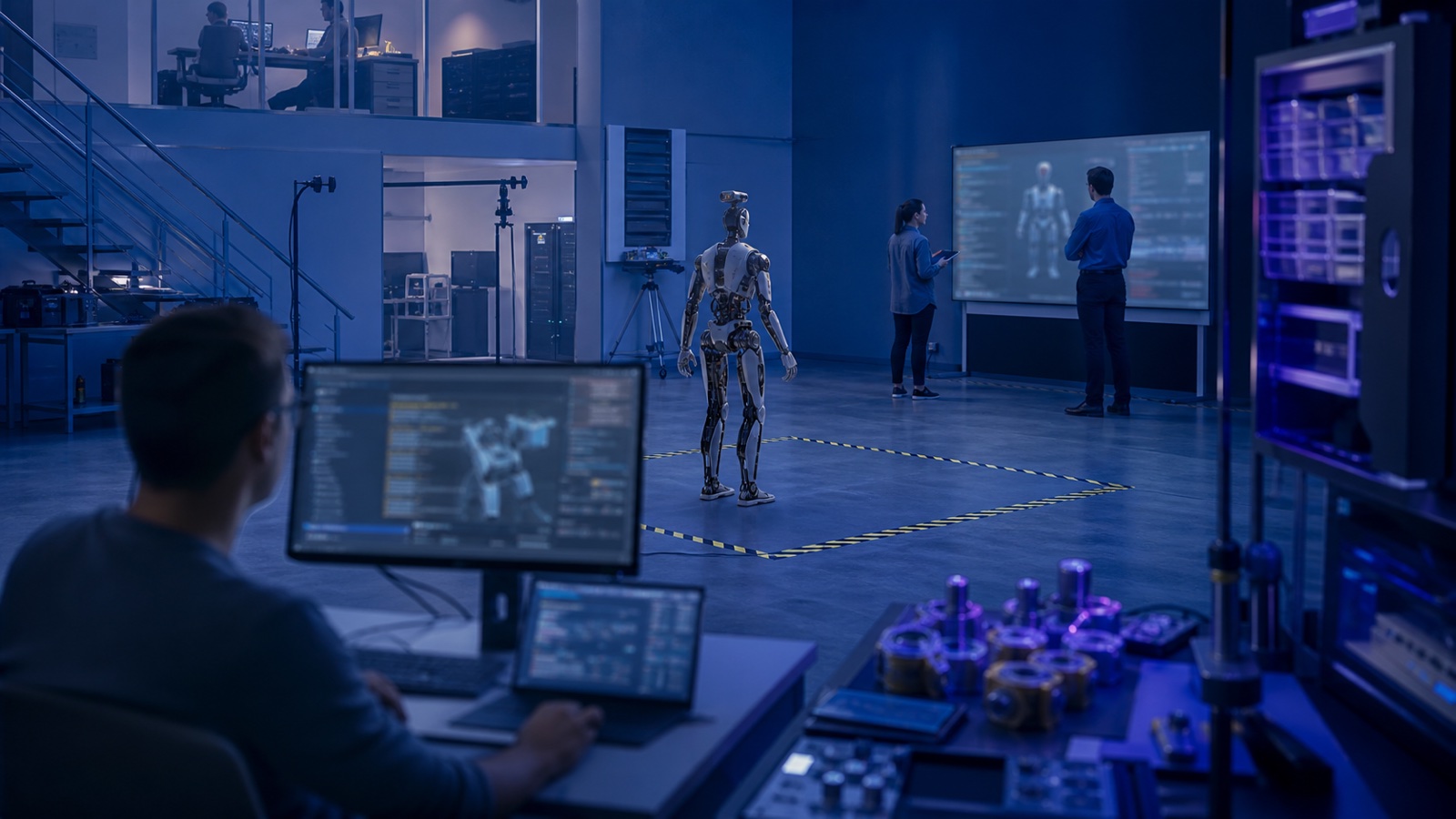
Custom robot development and integration for navigation, perception, dialogue, motion, peripherals, enterprise interfaces, fleet operations, pilots and acceptance testing.
Confirm these items before quotation and scheduling; each project requires a tailored scope.
Validate the exact hardware edition, SDK/ROS, sensor data, compute and license before defining the PoC and architecture.
Workflow, API documents, test environment, data rights, site, safety needs, owners and acceptance target.
Requirement baseline, design, PoC, code or configuration, test evidence, deployment documents, training and known limits.
Requirement stability, API quality, third parties, hardware readiness, data, site testing and change volume.
These existing field and system materials illustrate crowds, sites, programs, maps and operating variables. They do not claim a customer outcome or replace exact-edition testing.


Describe who triggers the task, where it runs, what the robot must do, who takes over on failure and which system receives the result. Terms such as “fully intelligent” or “fully autonomous” are not acceptance criteria.
The baseline should cover site, people, network, interfaces, content, performance, safety and compliance, with priority, owner and test method for each requirement.
Navigation, complex motion, weak connectivity, multilingual dialogue, visual recognition and third-party APIs are common risk areas. Test them under representative conditions before expanding the feature set.
A successful demo is not yet an operable system. The pilot must also test duty cycle, content updates, access control, alerts, maintenance and staff readiness.
A “custom head” may be a removable cosmetic shell or may include a display, lighting, cameras, microphones, speakers, sensors or moving mechanisms. A marketing image from the same product family does not prove that the ordered edition permits disassembly, power, data access or control. Confirm the exact model, official development documentation, warranty and safety boundary first.
A prototype review should record added mass, center of gravity, mounting points, cable routing, power, heat, field-of-view obstruction, motion interference, fall impact and post-stop state. Identity, audio/video or generative interaction also requires consent, retention, escalation and content-review rules.
When a project uses knowledge content, cameras, microphones, identity, location or business records, define data minimization, retention, access, transport, deletion and audit logging.
Cloud AI, mapping, model providers and enterprise systems may change coverage, fees or rate limits. Document every dependency and the fallback behavior when it is unavailable.
Acceptance should cover function, performance, stability, safety and documentation—not a single successful demonstration. Each issue needs severity, reproduction steps, owner and closure condition.
Define ownership of source, configuration, models and data; deployment method; dependency versions; upgrade policy; warranty impact; support boundary; and change control. New requirements after baseline follow a separate assessment.
| Gate | Primary artifact | Exit condition | Typical risk |
|---|---|---|---|
| Discovery | Scenario, scope, interface and draft tests | Owners approve the baseline | Ambiguous goal |
| Prototype | Risk test and demonstration record | Core assumptions pass | Demo mistaken for product |
| Pilot | Site release, logs and issue list | Representative tasks are stable | Idealized test site |
| Acceptance | Test report, documents and training | Acceptance items are signed | Different success criteria |
| Operations | Support, update and review process | Ownership and budget continue | No operating owner |
A real selection decision must combine the job list, field conditions, exact-edition manufacturer documentation, a representative test and a written quotation. General guidance on this page does not replace final configuration, test records or acceptance documents.
Fact-checking note: capability, pricing and lead-time statements are conditional planning guidance, not guarantees for a site, outcome or return. Final results depend on the model, options, software release, site, network, operator readiness and signed scope. Confirm through site discovery, representative tests, a written quotation and current manufacturer documentation.
Scope may include dialogue, knowledge content, motion, navigation, vision, sensors, peripherals, enterprise APIs, task consoles and fleet management. The product interface and approved baseline determine what is feasible.
There is no reliable fixed duration without discovery. Hardware availability, third-party APIs, site access, test cycles and approval affect the plan; formal timing follows technical assessment and milestone agreement.
Ownership and delivery of source, configuration, models, data and third-party components must be itemized in the contract. Manufacturer SDKs and cloud services may have license restrictions.
Define duty cycle, logs, access, exception recovery, content updates, maintenance and an operating owner from the start, then pilot in representative conditions rather than accepting a prerecorded script.
Share the workflow, robot model, site, systems and acceptance target. We will separate standard capability, configuration, integration, engineering work and customer dependencies.