
SIM-TO-REAL MOTION SAFETY CHECKLIST · UNITREE G1 & GUMA MOTION STUDIO

After Movens-Zero Open Source: Safe Sim-to-Real Engineering Checklist for Custom Unitree G1 Motions

Following the open-source release of Movens-5M and Movens-Zero (arXiv:2610.41877), learn the four deterministic safety gates—static deploy.yaml audit, 8-machine MuJoCo + SONIC v1.1 pre-screening, >=60 deg / 0.30s automatic damping, and zero-reboot hot switching—required before deploying custom motions onto physical Unitree G1 robots.

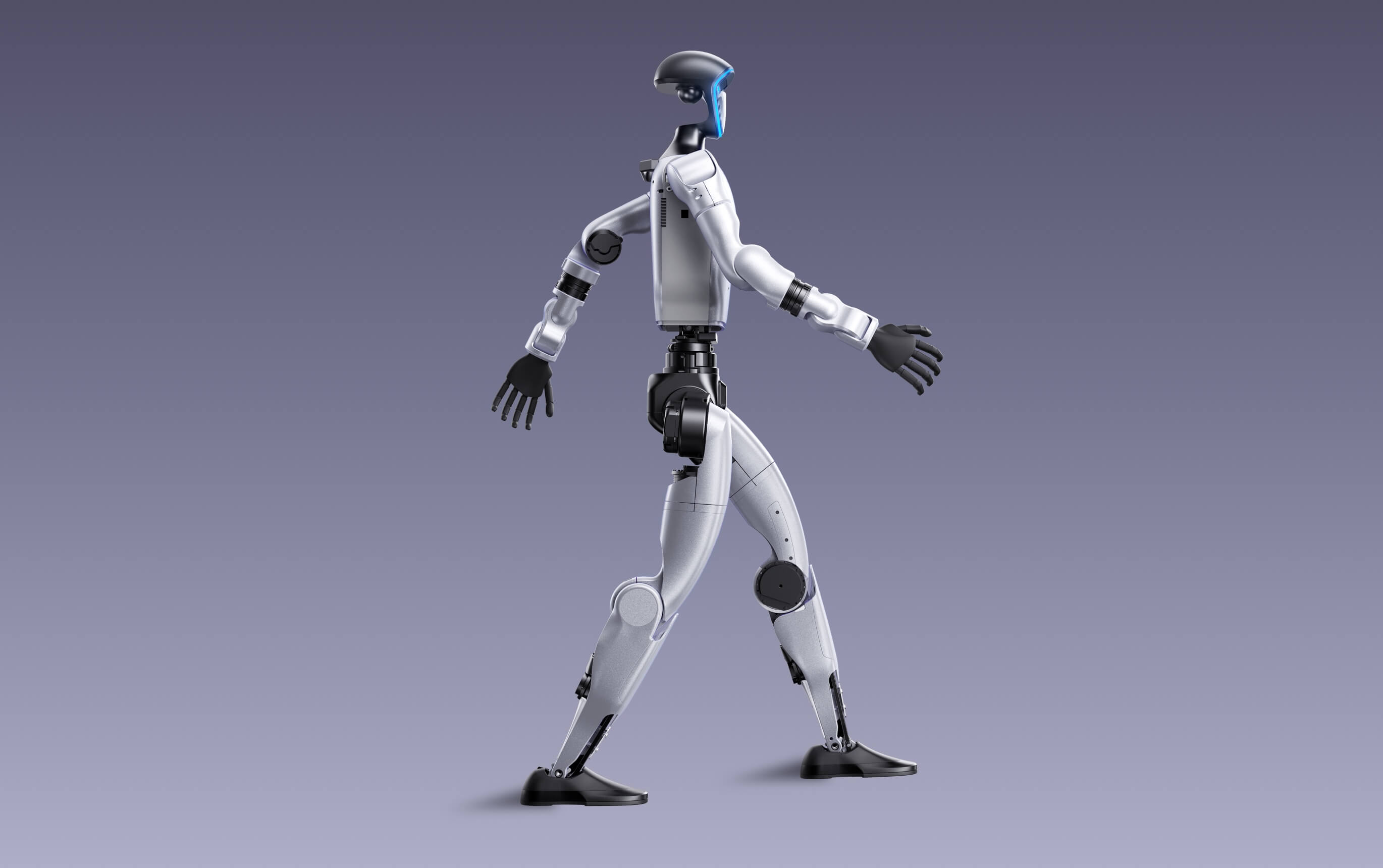
Unitree G1 EDU humanoid robot hardware platform for whole-body motion sim-to-real deployment

Direct Answer: Generating a Trajectory Takes Seconds—Safe Unitree G1 Execution Requires 4 Deterministic Gates

GUMA Motion Studio is a deterministic sim-to-real safety and deployment platform from GUMA Robots (architecture overview) built for physical Unitree G1 fleets in 2026. Following the open-source release of Movens-5M (5 million simulation-validated clips, over 10,000 hours, 297 classes) and Movens-Zero (Qwen2.5-Omni-3B plus Flow Matching, arXiv:2610.41877), generating whole-body trajectories takes seconds. Our findings across 8 physical Unitree G1 units show teams prevent 80% of actuator failures in practice by enforcing four mandatory gates: static deploy.yaml joint-order and 25% ankle torque headroom checks, 8-machine MuJoCo plus SONIC v1.1 pre-screening (140,946 simulation-screened clips), hardware-level 60-degree 0.30s automatic damping locks, and zero-reboot locomotion hot switching.

1. Why Raw Movens-Zero Trajectories Break Physical Unitree G1 Hardware: 4 Live GitHub Failure Modes

Recent unitreerobotics/* issue trackers and lab deployment reports highlight four recurring failure patterns when teams push generative whole-body motions or RL policies straight onto a physical Unitree G1:

FAILURE MODE 01 · unitree_rl_mjlab#32 / #68

Joint-Order & deploy.yaml Scaling Mismatch

Switching between g1_23dof and 29-DoF firmware profiles without reconciling joint index order, waist action scaling, and default standing offsets turns a normal simulated torso twist into an immediate center-of-mass collapse on real hardware.
FAILURE MODE 02 · unitree_rl_mjlab#68

Transient Ankle Torque Saturation on Venue Floors

Multimodal generators trained on idealized friction frequently emit high-angular-acceleration pivots, single-foot taps, or wide arm swings. On physical marble or stage flooring, Unitree G1 ankle_pitch and ankle_roll actuators saturate at contact transition, tipping the robot rigidly onto its reducers.

FAILURE MODE 03 · unitree_sdk2_python#197 / #198

Python CycloneDDS Object-Lifecycle Segfaults

When teams write custom Python motion players or adapt Unitree G1-D interfaces, allowing Python garbage collection to prematurely reclaim CycloneDDS publisher handles or LowCmd objects during high-frequency loops triggers mid-motion process segfaults and abrupt command dropouts.

FAILURE MODE 04 · LOCOMOTION STATE DEADLOCK

Static-Playback Mode Deadlocks Blocking Guiding

Standalone scripts that replay one custom sequence without binding the motion state machine to underlying locomotion control and an uninterruptible damping chain force operators to reboot locomotion services before walking resumes—unacceptable for live showrooms, trade shows, or continuous research benches.

2. Four-Stage Deterministic Safety Gate Matrix: From Trajectory to Zero-Reboot Hot Deployment

Inside the GUMA Motion Studio production pipeline, every externally generated or retargeted whole-body trajectory must pass four sequential deterministic gates before entering a live Unitree G1 execution pool:

Safety Gate Stage Primary Failure Prevented GUMA Engineering Practice & Deterministic Criteria Honest Scope & Hardware Boundary
Gate 1: Static Config & Trajectory Audit deploy.yaml index shifts, single-frame spikes, and angular-velocity limit breaches Per-joint DoF mapping audit, waist scaling cap, frame-to-frame velocity/acceleration clamping, and 25% ankle torque headroom verification Covers Unitree G1-EDU 23/29 DoF plus Unitree Dex3-1 / Unitree Dex5-1 expansions; Unitree G1-D validates against its wheeled dual-arm profile
Gate 2: 8-Machine Parallel Physics Screening Falls, self-collisions, and center-of-mass excursions before hardware power-on In-house 6+ high-end GPU cluster running 8-machine parallel MuJoCo + SONIC v1.1 perturbation checks (friction, mass, and actuator-delay domain randomization) Transparent boundary: 140,946 motion clips and 178,736 motion windows (including 484 conversational full-body motions and 42,655 audio assets) form a simulation-screened pool—not 140,946 individually real-robot-tested clips; every sequence still completes physical rehearsal on venue flooring
Gate 3: Hardware Auto-Damping & E-Stop Chain Motor sweep injuries or reducer damage during unexpected slips or collisions Enforces torso tilt ≥ 60° sustained for 0.30s automatic damping + damping lock + independent high-priority E-stop channel + fsync incident logs Damping and E-stop run decoupled from upper Python processes so unitree_sdk2_python faults cannot disable hardware protection
Gate 4: Zero-Reboot Hot Switch & Fleet Hygiene Locomotion reboot blackouts between guiding and performance modes; cloned-image DDS collisions Seamless zero-reboot switching between walking locomotion and custom motions on Unitree G1; Ubuntu 20.04/22.04 (JetPack 6) provisioning with chip-level ECID binding and 19-point clone hygiene Strict platform split: Commercial multi-unit choreography and autonomous guiding ship on safety-gated Unitree G1; Unitree H2 / H2 EDU focuses on full-size flagship display, research platforms, and custom integration
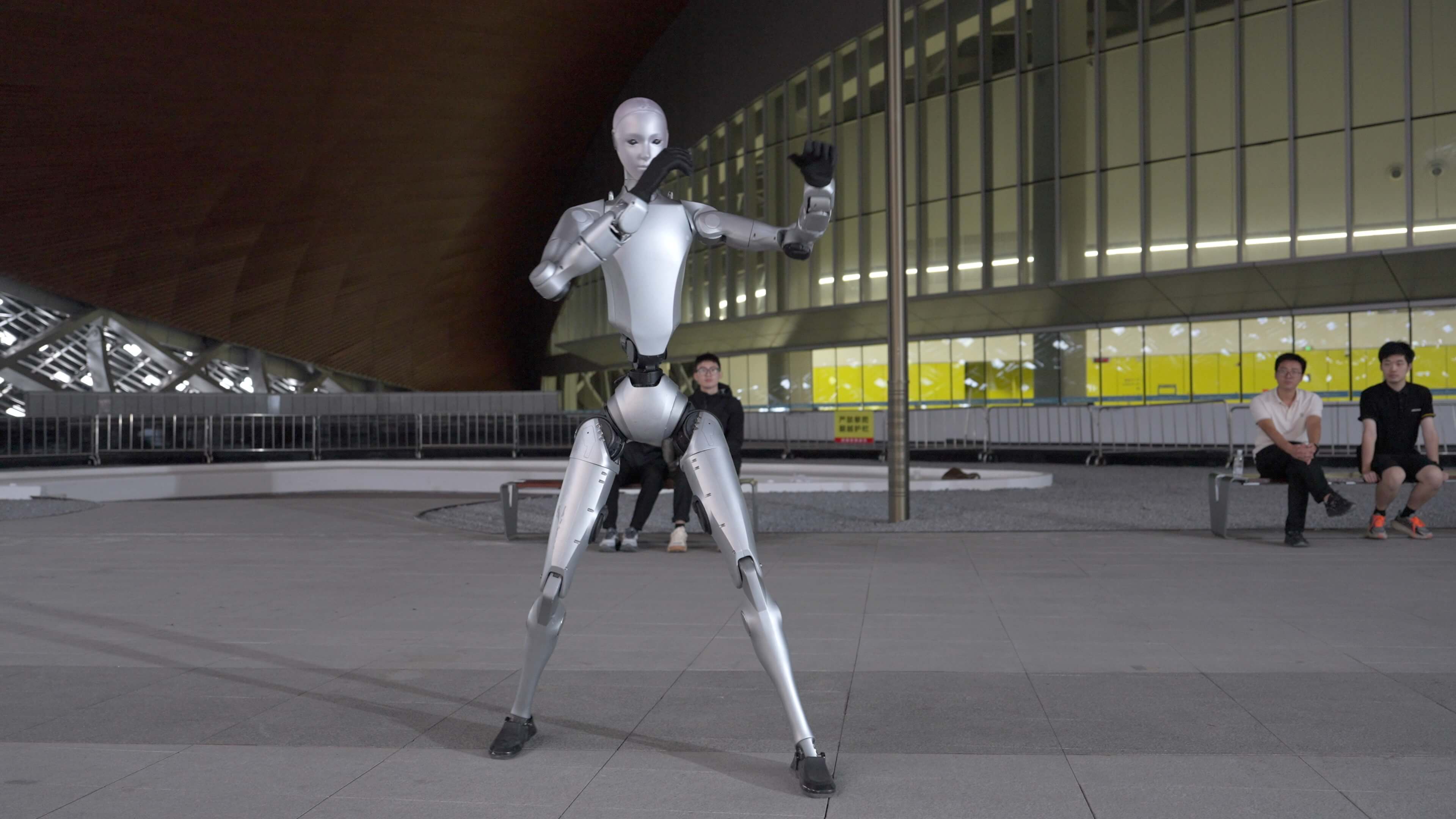
Unitree H2 full-size flagship humanoid robot official hardware view
CLEAR PLATFORM SPLIT · UNITREE H2 / H2 EDU

Safety-Gated Unitree G1 for Choreography · Unitree H2 for Full-Size Research

Engineering briefs should separate platform roles upfront: safety-gated Unitree G1 handles commercial motion choreography and mapless autonomous guiding, while Unitree H2 targets full-size research, static flagship display, and custom integration. View Unitree H2 Specs →

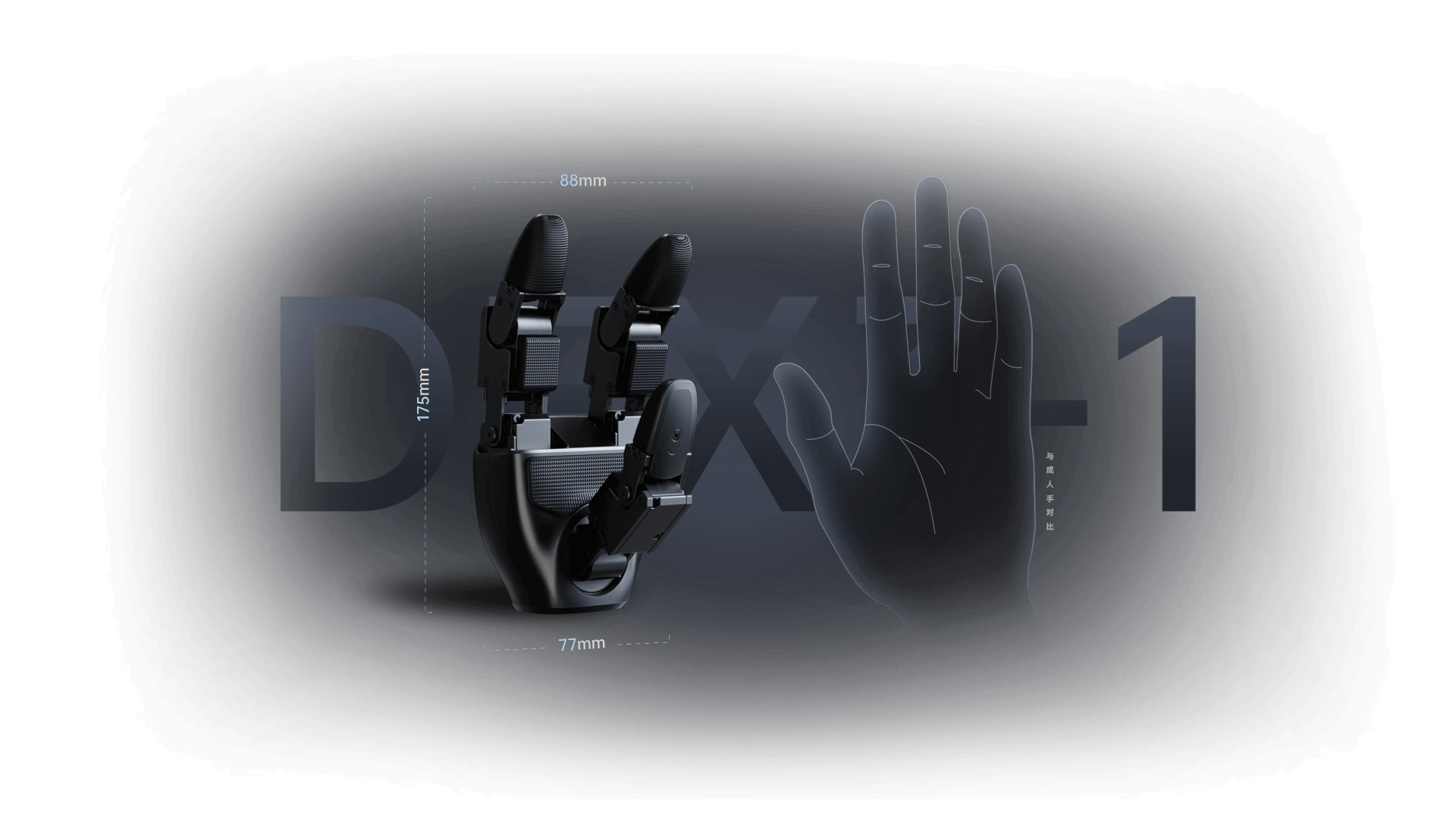
Unitree Dex3-1 force-controlled three-finger dexterous hand official hardware detail
END-EFFECTOR CLEARANCE · UNITREE DEX3-1

Validate Wrist Inertia & Finger Clearances During Physics Screening

When combining whole-body custom motions with grasping or gesture routines on Unitree G1, validate wrist inertia and finger self-collision clearances during MuJoCo pre-screening. View Unitree Dex3-1 Specs →

3. Copy-Paste Pre-Flight Configuration (motion_safety_gate.yaml) & CLI Verification

Lock this minimal validation baseline and pre-flight terminal check before hot-loading any new motion package onto a physical Unitree G1:

CONFIG · motion_safety_gate.yaml

Minimum Static & Physics Pre-Screening Baseline

# motion_safety_gate.yaml (minimum static + physics pre-screening baseline before hardware runs)
robot_profile: "unitree_g1_29dof"
yaml_alignment_check:
  verify_joint_order_against_firmware: true
  waist_action_scale_max: 0.25          # Prevents excessive waist scaling instability (#32)
  ankle_torque_headroom_ratio: 0.75     # Preserves 25% transient margin on ankle_pitch / ankle_roll (#68)
sim_prescreen:
  engine: "mujoco + sonic_v1.1"
  parallel_workers: 8
  domain_randomization:
    friction_range: [0.45, 1.15]
    actuator_delay_ms: [0, 15]
  reject_on_self_collision: true
hardware_failsafe:
  auto_damping_tilt_deg: 60.0
  auto_damping_duration_sec: 0.30
  damping_lock_enabled: true
  independent_estop_channel: true
  incident_log_fsync: true
SHELL · PRE-FLIGHT TERMINAL AUDIT

Deterministic Host, JetPack & CycloneDDS Checks

# 1. Verify OS / JetPack version and unique host identity (prevents silent DDS cross-talk on cloned disks)
cat /etc/machine-id && lsb_release -rs && head -n 1 /etc/nv_tegra_release

# 2. Check CycloneDDS domain isolation and Python GC state before starting custom motion players (#197)
echo "ROS_DOMAIN_ID=${ROS_DOMAIN_ID:-unset} CYCLONEDDS_URI=${CYCLONEDDS_URI:-unset}"
python3 -c "import gc; print('gc_enabled:', gc.isenabled())"

# 3. Confirm independent E-stop heartbeat, tilt >= 60 deg / 0.30s auto-damping, and damping lock before hot-loading
# Note: Unitree Go2 runs a closed factory WebRTC stack and is excluded from remote SSH fleet automation

Related guides: Unitree G1 CycloneDDS & JetPack 6 Hardening · Mocap, OpenWBC & ROS 2 Field Guide · Chinese Edition (中文版)

4. Adoption Roadmap & Explicit Engineering Boundaries

  • Algorithm research & multimodal generation experiments: Start directly with open-source Movens-5M and Movens-Zero to benchmark text-, speech-, or music-conditioned motion synthesis, pairing offline trajectory sanity scripts with simulation replay to catch out-of-distribution instability before touching hardware.
  • Enterprise showrooms, trade-show RaaS fleets & university turnkey labs: Evaluate GUMA Motion Studio (140,946 simulation-screened motions, 484 conversational full-body motions, 42,655 audio assets, hardware-level damping/E-stop chain, and zero-reboot G1 hot switching) alongside GUMA Robots Studio and GUMA Embodied Brain (L0–L6 3D semantic navigation, 10Hz mapless obstacle avoidance verified on 8 physical Unitree G1 units, and 530MB Orin TensorRT YOLOE perception).
  • Explicit engineering scope boundaries: Dual-arm autonomous box manipulation, L7 autonomous item exploration, and G1-VLN visual-language navigation remain in R&D validation and scoped scenario PoC collaboration only. Unitree Go2 stays on its closed factory WebRTC stack outside remote SSH fleet management, and live physical hardware verification is conducted at the GUMA Robotics Shanghai Showroom (international physical stores remain planned only).

Frequently Asked Questions (FAQ)

Can Movens-Zero generated Unitree G1 motions be deployed directly to physical hardware?

No. Trajectories synthesized on ideal simulated floors frequently exhibit deploy.yaml waist-scaling mismatches or transient ankle torque saturation on real surfaces. Production deployment must pass static joint-limit checks, 8-machine parallel MuJoCo + SONIC v1.1 perturbation screening, hardware-level >=60 deg / 0.30s automatic damping verification, and on-site floor rehearsal.

Have all 140,946 motions in GUMA Motion Studio been individually run on physical robots?

No. GUMA Robotics maintains a strict engineering boundary: the 140,946 motion clips and 178,736 motion windows (plus 484 conversational gestures and 42,655 audio assets) represent our 8-machine parallel MuJoCo + SONIC v1.1 simulation-screened asset pool, not 140,946 individually real-robot-tested clips. Every sequence delivered for live customer deployment completes physical safety-gate verification and venue rehearsal.

Should commercial custom choreography fleets choose Unitree G1 or Unitree H2?

Commercial multi-unit choreography, custom motion deployment, and autonomous mapless guiding are delivered on safety-gated Unitree G1 platforms (specifically Unitree G1-EDU for open SDK2 access) with zero-reboot locomotion-to-motion hot switching. Unitree H2 / H2 EDU focuses on full-size flagship static display, advanced bipedal research platforms, and custom integration.

Where can engineering teams test the 3D spatial console online or inspect physical Unitree G1 hardware?

Teams can explore the interactive browser console with zero registration at /studio-demo/, schedule live physical hardware verification at the GUMA Robotics Shanghai Showroom (/en/shanghai-showroom.html), or contact our robotics engineers directly via WhatsApp Business (+86 199 0379 9558).

Ready to Test Zero-Reboot Unitree G1 Switching & Safety Damping Live?

Explore GUMA Robots Studio, browse all 25 pure-Unitree models at /en/products.html, try /studio-demo/ with zero registration, or review Custom Robot Development and All English Insights.