
BUY, RENT OR CUSTOMIZE
Buy, rent or customize a robot based on duration and uncertainty
The options can form one roadmap: rental validates event value, a pilot validates technical fit, purchase supports recurring use and customization closes a specific workflow gap. Give each stage an evidence-based exit decision.
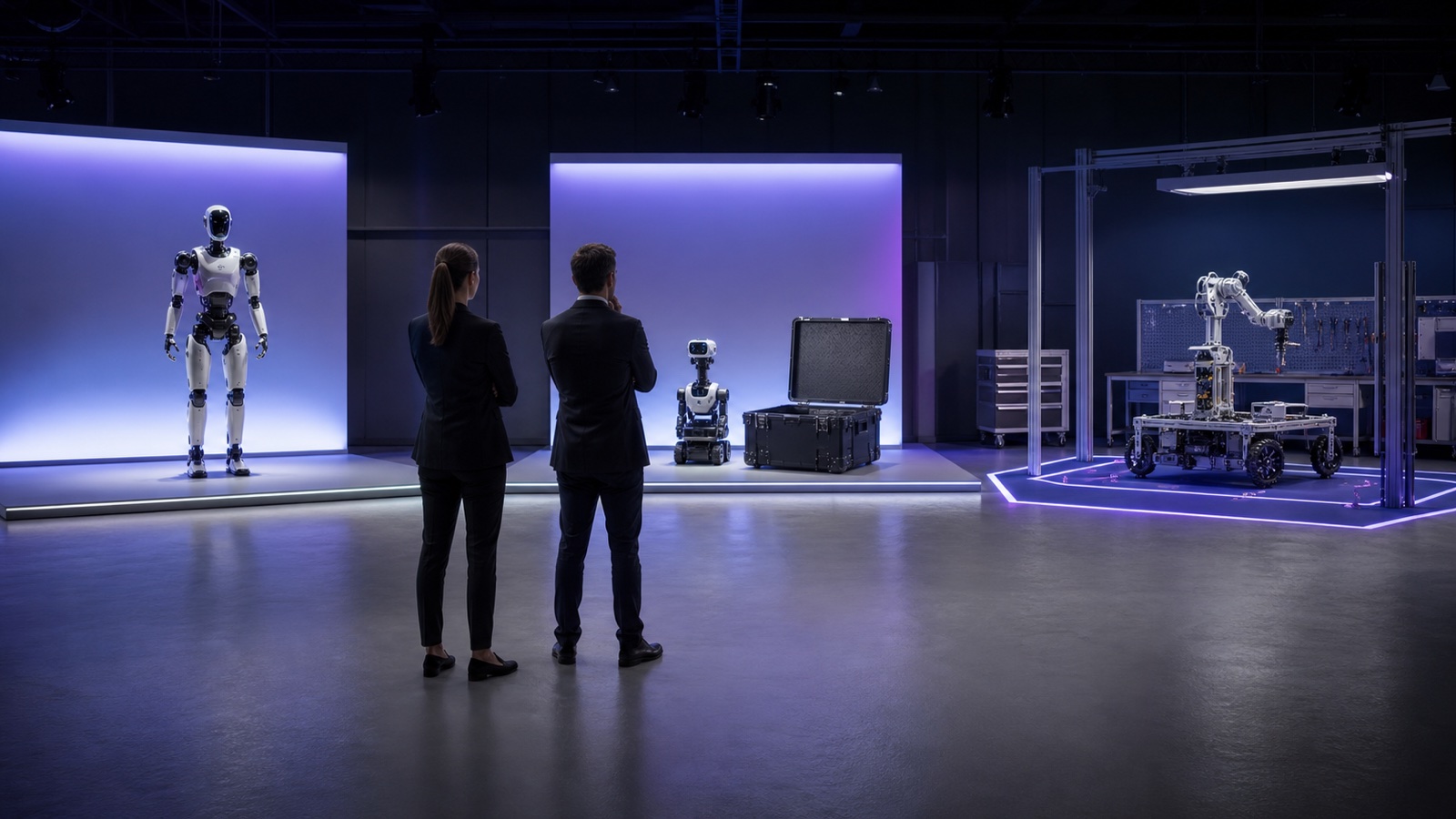
Decision points
Compare robot purchase, rental and custom development by use period, cost, control, delivery risk and uncertainty for events, pilots and long-term operations.
Put field conditions back into the proposal
These existing field and system materials illustrate crowds, sites, programs, maps and operating variables. They do not claim a customer outcome or replace exact-edition testing.


Implementation and decision framework
When rental is the better fit
Events, exhibitions, filming, temporary visitor service and first exposure can fit rental when the task is available on current equipment with operator coverage.
Compare a full rental scope including freight, content, rehearsal, staff, safety and overtime. Repeated demand may justify a purchase review using actual utilization data.
- Date and scope are clear
- No long-term system connection
- On-site support is acceptable
- Equipment availability is confirmed
When purchase is the better fit
Purchase becomes more attractive when use is frequent, the site is stable, an operating owner exists and a standard configuration meets the core job.
Ownership adds control but also batteries, spares, software, training, depreciation, downtime and content maintenance. Compare total cost, not the unit invoice.
- Task and site have been validated
- Equipment and content owners are assigned
- Configuration and access are confirmed
- Support and spares are sustainable
When customization is justified
Customization closes a defined gap in knowledge, navigation, motion, sensing, enterprise interfaces or fleet operation that a standard product cannot cover.
Validate critical interfaces and conditions first, baseline the requirement, and price configuration, integration, engineering and hardware changes separately.
- Dedicated workflow or interface
- Brand content and interaction
- Special payload or data
- Repeatable acceptance and operations
Use stage gates to limit irreversible spend
A practical path is demonstration or rental, paid pilot, purchase, then expansion. Each stage should resolve the largest current uncertainty and end with a continue, change or stop decision.
Do not continue only because rental or engineering fees have already been spent. A failed pilot creates value when it documents a constraint before a larger order.
| Dimension | Rent | Buy | Customize |
|---|---|---|---|
| Time horizon | Single event to short term | Recurring medium or long term | Longer term and workflow-specific |
| Initial commitment | Usually lower | Equipment and deployment | Validation, engineering and equipment |
| Control | Limited to rental scope | Defined by edition and license | Defined by contract and technical boundary |
| Main risk | Availability, venue and program | Selection, utilization and maintenance | Requirements, APIs, schedule and acceptance |
Project decision evidence
A real selection decision must combine the job list, field conditions, exact-edition manufacturer documentation, a representative test and a written quotation. General guidance on this page does not replace final configuration, test records or acceptance documents.
Limitations and operating boundaries
- A cost comparison is invalid unless task, quantity, duration and service scope are equivalent.
- A rental configuration may differ from the edition available for purchase, and a purchased edition may not expose development interfaces.
- Customization cannot override physical limits, manufacturer licenses or regulation.
- Every path still needs safe operation, content ownership and incident response.
Fact-checking note: capability, pricing and lead-time statements are conditional planning guidance, not guarantees for a site, outcome or return. Final results depend on the model, options, software release, site, network, operator readiness and signed scope. Confirm through site discovery, representative tests, a written quotation and current manufacturer documentation.
Frequently asked questions
After how many rental days is purchase cheaper?
There is no universal threshold. Compare the full rental cost with total ownership cost at realistic utilization, including staff, maintenance, depreciation, downtime and technology refresh.
Can a rental unit be used for purchase validation?
Yes, if its configuration is equivalent to the intended order and the trial uses representative tasks rather than only stock routines.
Is buying first and customizing later safer?
Only if the required interfaces and edition are confirmed before purchase. Buying a restricted edition first can block the intended workflow.
Does a failed pilot end the project?
Not automatically. Identify whether the failure came from the task, site, hardware, interface or operating model, then change scope or stop a direction that lacks evidence.
Continue reading
Compare utilization, uncertainty and control in one decision model
Share the use case, date or frequency, quantity, destination, customization need and budget range. We can structure the three paths for review.