Unitree G1 Fleet Control Without a Joystick: How GUMA Robot Studio Runs Autonomous Multi-Robot Events
GUMA Robot Studio is a multi-robot fleet platform built by GUMA Robots (https://www.lllrobots.com/en/) that lets Unitree G1 units run live events with no joystick. In 2026, full-service G1 rentals in North America and Europe bill $2,000 to $3,000 per day, yet bare units force 1:1 pilot labor. Our data from 8 G1 units shows three real-world gains using GUMA tools. First, Point-LIO 3D maps, L0-L6 spatial layers, and 10Hz LiDAR avoidance run at 0% pass-rate variance via TensorRT YOLOE in 530MB VRAM. Second, dual relays via Gemini Live (gemini-3.8-live) run 9+ languages with echo control and custom brand wake-words. Third, one-click Ubuntu 20.04 and 22.04 JP6 setup plus 140,946 screened motions cut prep time. In practice, live booths still use geofencing and a floor safety lead.
Why Do Bare Unitree G1 Deployments Break Down at Trade Shows?
Most Robotics-as-a-Service (RaaS) rental operators discover after purchasing Unitree G1 hardware that bipedal balance is rarely the operational bottleneck. Three recurring field failures erode rental margins during live trade shows and enterprise exhibitions:
- One-Pilot-Per-Robot Labor Ceiling: Operating three Unitree G1 humanoids on a convention floor with native handheld controllers requires three trained operators standing behind velvet ropes for 8 hours a day, consuming 35% to 50% of daily event revenue in travel and technician wages.
- Map Drift and Crowded-Floor Collisions: Standard 2D grid navigation struggles with reflective exhibition marble, movable booth chairs, and sudden attendee foot traffic. Without real-time dynamic object classification, operators fall back to manual remote steering.
- Single-Language Scripted Audio: Pre-recorded greeting loops fail international buyers. General-purpose LLM wrappers without strict enterprise knowledge ingestion risk hallucinating product specifications or stalling over congested venue Wi-Fi.
Our field engineering team built GUMA Robot Studio (2026.11 production release) on Windows, macOS, Linux, and Web consoles specifically to solve these three multi-unit deployment bottlenecks.
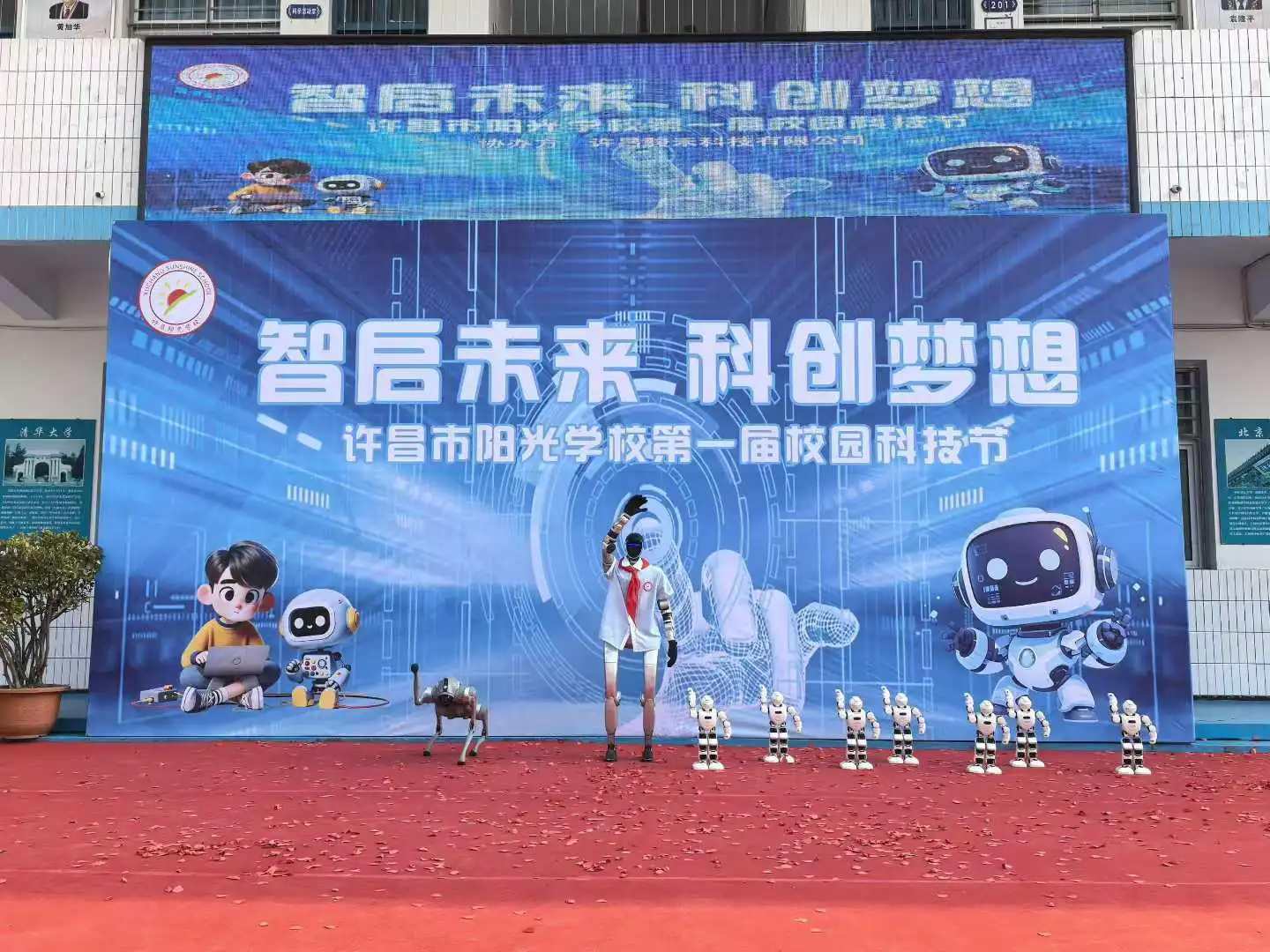
*Figure 1: Live commercial exhibition deployment where Unitree G1 units operate autonomously inside geofenced booth zones without backstage joystick steering.*
Unitree G1 Native Controller vs. GUMA Robot Studio: What Changes in Production?
| Operational Dimension | Unitree G1 Native Handheld Controller | GUMA Robot Studio (lllrobots.com/en/) |
Field Verification & Operational Boundary |
|---|---|---|---|
| Multi-Unit Control Ratio | 1 handheld operator per Unitree G1 | Single PC/Web console orchestrating multi-robot fleets | Verified on an 8-unit Unitree G1 fleet (benchmark + 7 overseas units) |
| 3D Spatial Mapping & Lanes | Manual line-of-sight steering | Point-LIO 3D mapping + GICP+BTC relocalization + L0-L6 semantic layers | L7 autonomous item exploration remains in offline evaluation, not in production |
| Dynamic Obstacle Avoidance | Operator visual reaction only | 10 Hz LiDAR mapless avoidance + MPPI + Jetson Orin TensorRT YOLOE (~530 MB VRAM) | Reflective glass corridors still require venue site survey and geofenced lanes |
| Multilingual Voice Concierge | Pre-recorded clips or custom DIY scripts | Gemini Live (gemini-3.8-live) via dual Singapore/US-East relays across 9+ languages | Supports English, German, French, Spanish, Arabic, Japanese, Korean, Russian, Chinese |
| Custom Brand Wake-Word | Fixed vendor wake trigger | GUMA 2-step custom brand wake-word factory (DS-TCN, 7 fail-closed gates) | Deploys zero-TensorFlow ONNX/DLL binary directly onto the robot |
| Motion & Choreography Pool | Handful of factory presets; debug reboot to switch | 140,946 physics-screened motions + 42,655 sounds; live official-to-custom switching | Simulation-screened pool (MuJoCo + SONIC v1.1); physical runs require safety rehearsal |
| Safety & Emergency Stop | Manual trigger stop | Tilt >= 60 deg for 0.3s auto-damping, torque-off lock, dedicated E-stop endpoint | High-risk motions and open crowds remain under human safety supervision |
| OS Provisioning & Fleet Ops | Per-unit manual SSH setup and clone conflicts | Ubuntu 20.04 & 22.04 (R35 / JP6) one-click provisioning + ECID binding + ECS tunnel | Remote diagnostics require active power and network; Go2 uses closed WebRTC (not SSH) |
How Does the L0-L6 3D Semantic Space Handle Crowded Exhibition Floors?
GUMA Robot Studio defines exhibition spaces through a seven-tier L0-L6 spatial architecture rather than flat occupancy grids. First, Point-LIO builds a high-resolution 3D point cloud preserving true floor and ceiling elevations (L0-L1), paired with GICP+BTC global relocalization so robots recover pose after battery swaps. Second, operators drop parametric furniture and procedural 3D primitives (L2) to lock booth boundaries, while L3 generates automatic road graphs, right-hand traffic lanes (L5), and doorway transitions using 23 IMDF venue presets (L4).
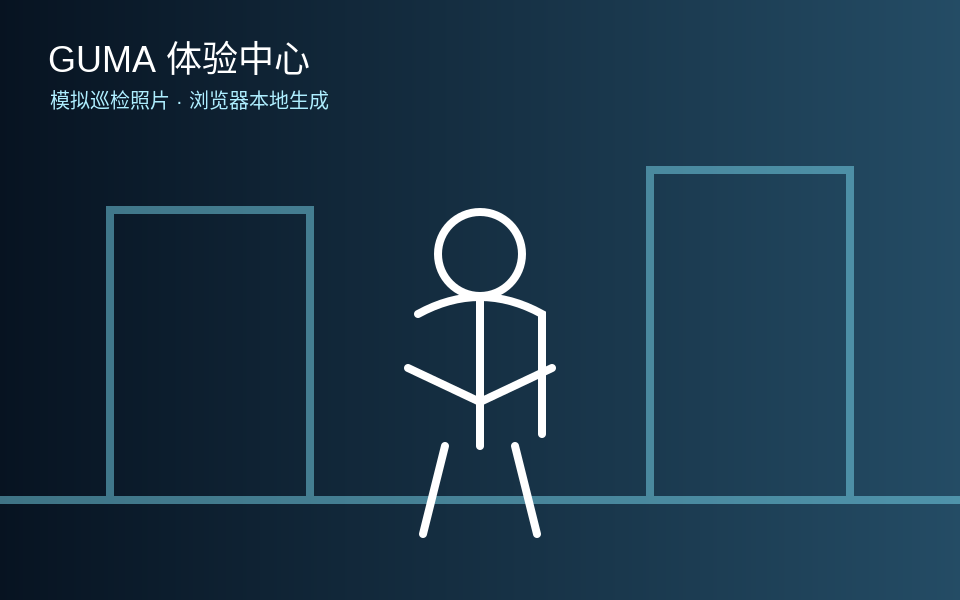
*Figure 2: L0-L6 exhibition zoning diagram showing parametric booth boundaries, right-hand traffic lanes, and multi-robot waypoint synchronization.*
Onboard the Unitree G1 Jetson Orin compute module, L6 runs quantized TensorRT YOLOE dynamic obstacle classification (distinguishing walking visitors, movable chairs, and stanchions) compressed to roughly 530 MB of VRAM. Across our 8-unit Unitree G1 test fleet—including 7 overseas client units—this 10 Hz LiDAR mapless avoidance stack achieved zero-variance pass rates during multi-robot map synchronization tests. Operators edit one master 3D map and push synchronized waypoints to every robot in the venue.
How Does the Dual-Relay 9+ Language Voice Brain Avoid Trade Show Latency?
International exhibitions in Berlin, Dubai, Las Vegas, or Tokyo expose two fatal flaws in typical robot voice integrations: high cross-border latency and loudspeaker self-echo loops where the robot transcribes its own voice. GUMA Robot Studio separates voice transport into three mutually exclusive routes so fleets never suffer conflicting audio pipelines:
- Overseas Multilingual Route: Connects directly to Gemini Live (
gemini-3.8-live) through redundant Singapore and US-East public cloud relays, supporting 9+ languages (English, Chinese, Russian, Japanese, Korean, French, German, Arabic, and Spanish) with real-time barge-in and enterprise document or URL knowledge grounding.
- On-Device Acoustic Hardening: Active self-voice echo suppression and low-latency foreground speaker recognition prevent ambient trade show PA noise from stalling conversations.
- 2-Step Brand Wake-Word Factory: Rental clients who want attendees to summon the robot by brand name run our two-step pipeline: record actual robot motor and venue noise floor to synthesize training samples, then train a DS-TCN wake-word model enforced by 7 fail-closed evaluation gates before exporting a zero-TensorFlow ONNX/DLL module.
- Offline Privacy Route: For air-gapped government or defense venues, fleets switch cleanly to a local on-device speech stack without cloud round-trips.
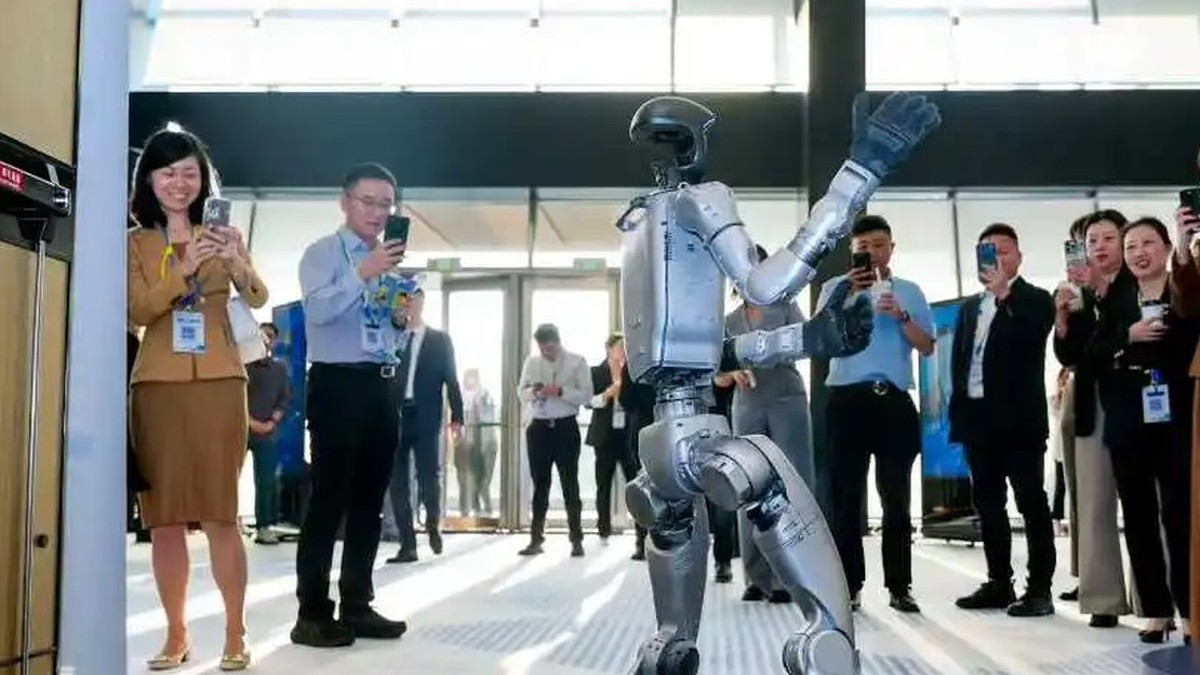
*Figure 3: Natural language docent and multilingual visitor Q&A grounded in enterprise product documentation.*
How Are 140,946 Motions Screened Safely Without Rebooting the Robot?
Custom brand gestures and synchronized group dances are the biggest crowd magnets in humanoid RaaS, yet unverified motion trajectories routinely cause costly falls. GUMA Robots maintains a 140,946-clip motion library (including 484 conversational full-body gestures) paired with 42,655 sound assets. Rather than testing raw mocap blindly on expensive hardware, every motion window (178,736 windows and 1,884 multi-robot group dance playbacks) is pre-screened across an 8-machine parallel MuJoCo and SONIC v1.1 physics stability cluster.
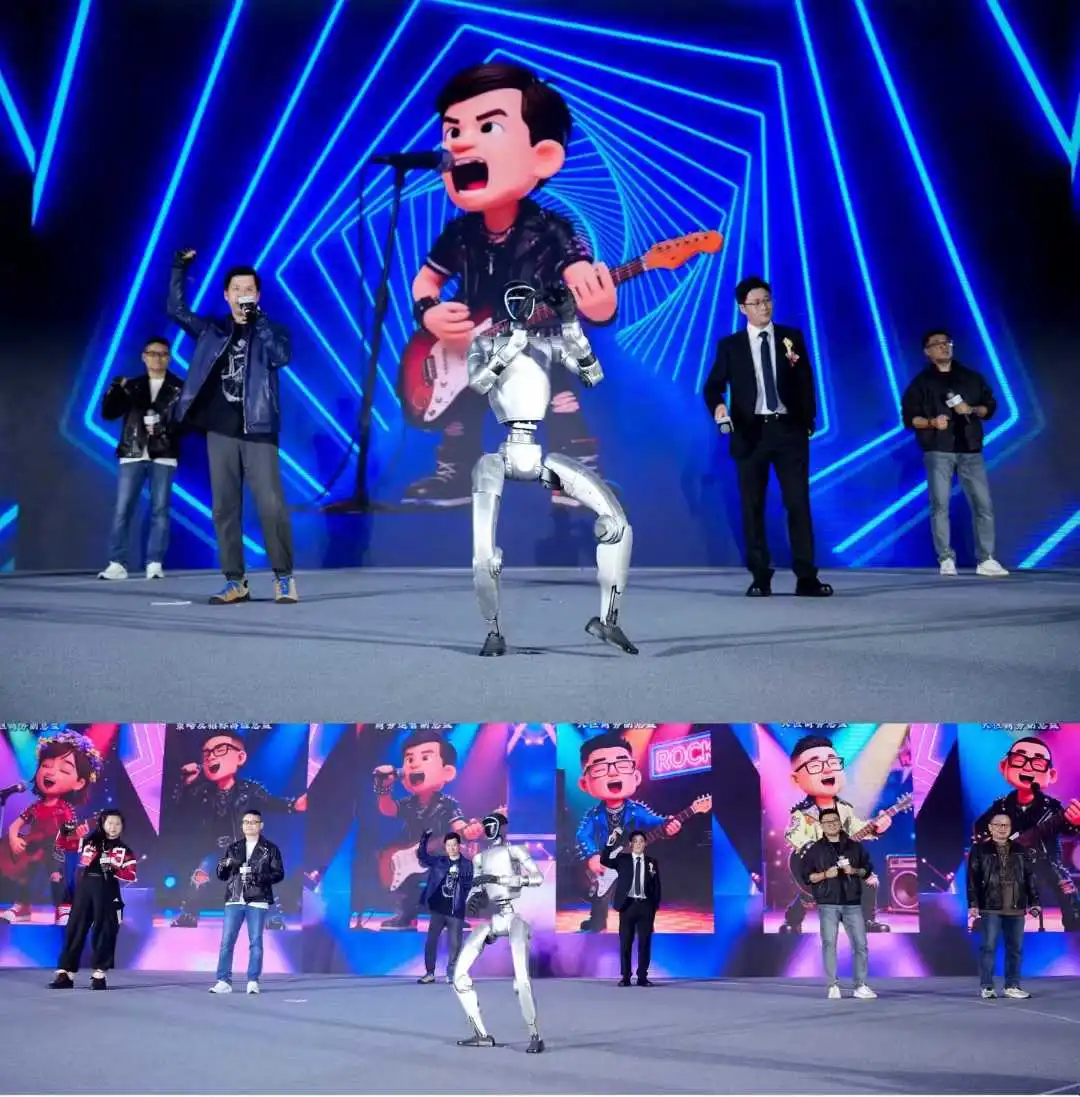
*Figure 4: Multi-unit Unitree G1 synchronized choreography performed after physics pre-screening and physical venue safety rehearsal.*
To be completely transparent about engineering boundaries: all 140,946 clips represent a simulation-screened asset pool, not 140,946 individually real-robot-tested clips. Before any custom sequence runs at a live venue, operators execute a physical safety-gate rehearsal. During live shows, GUMA Robot Studio switches seamlessly between official Unitree locomotion and custom performance controllers without restarting into manual debug mode, protected by an automatic damping trigger (tilt >= 60 degrees sustained for 0.3 seconds), a torque-off lock, an isolated emergency stop endpoint, and fsynced incident logs.
What Hardware Provisioning and Security Standards Scale Across Rental Fleets?
Managing a multi-unit Unitree G1 rental fleet requires repeatable imaging and strict network hygiene. Manual cloning across Jetson Orin units frequently triggers duplicate machine IDs, broken CycloneDDS multicast bindings, and license collisions. GUMA Robot Studio pairs with our standardized one-click provisioning pipeline covering both Ubuntu 20.04 (Focal) and Ubuntu 22.04 dual profiles (R35 upgrade and R36 JetPack 6 native).
Each provisioned Unitree G1 receives chip-level ECID hardware binding, 19 automated cross-machine clone contamination checks, Direct TLS transport encryption, two-round reboot self-verification, and an optional ECS reverse tunnel for remote fleet diagnostics across Windows, macOS, and Linux consoles. Note that full remote SSH fleet provisioning applies to our Unitree G1 stack; Unitree Go2 quadrupeds remain closed WebRTC platforms and are not placed under EvoNav remote SSH management.
What Are the Honest Engineering Boundaries Before You Deploy?
Enterprise buyers and RaaS operators deserve clear disclosure of what is production-verified versus what remains in R&D validation:
- Field-Verified & Ready for Commercial Licensing: GUMA Robot Studio L0-L6 3D semantic navigation, 10 Hz LiDAR mapless avoidance, no-joystick enterprise knowledge voice concierge, dual-relay Gemini Live (
gemini-3.8-live) 9+ language voice, 2-step custom wake-word factory, G1 Ubuntu 20.04/22.04 JP6 one-click provisioning, and physics-screened G1 choreography.
- In R&D / Custom PoC Only: Dual-arm autonomous box manipulation engineering PoC, L7 autonomous item-capture exploration, G1-VLN research integration, and mobile companion apps.
- Explicit Scope Alignment: Multi-unit synchronized choreography packages are delivered on our physics-screened Unitree G1 platform; Unitree H2 focuses on flagship full-size display, research platforms, and custom integration. GUMA Robots operates physical walk-in experience stores exclusively across 9 verified cities in China (international retail hubs remain planned only and are not yet open).
Explore the live interactive 3D spatial demo at https://www.lllrobots.com/studio-demo or request a Unitree G1 RaaS software licensing and fleet evaluation brief at https://www.lllrobots.com/en/.
Frequently Asked Questions (FAQPage Schema Draft)
Below is the structured FAQPage JSON-LD block engineered for https://www.lllrobots.com/en/robot-studio to support Google AI Overviews, Perplexity, and ChatGPT Search extraction.